
Giulio Ferenac Wines
Domaine
Family, terroir and vision.
Family
A continuity that endures.
The Ferenac family has been present in Istria for more than three centuries. Its roots reach back to the 17th century, when a Venetian officer settled in the western part of the peninsula and established a bond with this land that has endured through time.
On these same positions, where the village of Ferenci later took shape, the vine was never treated as an ordinary crop. It remained part of a continuity passed down through generations, together with a quiet understanding of place and measure.
The modern chapter began at the end of the 20th century, when Giulio Ferenac took over the estate. His approach was not aimed at changing what already existed, but at introducing discipline. Work in the vineyard became more precise, selection more deliberate and the cellar more focused.
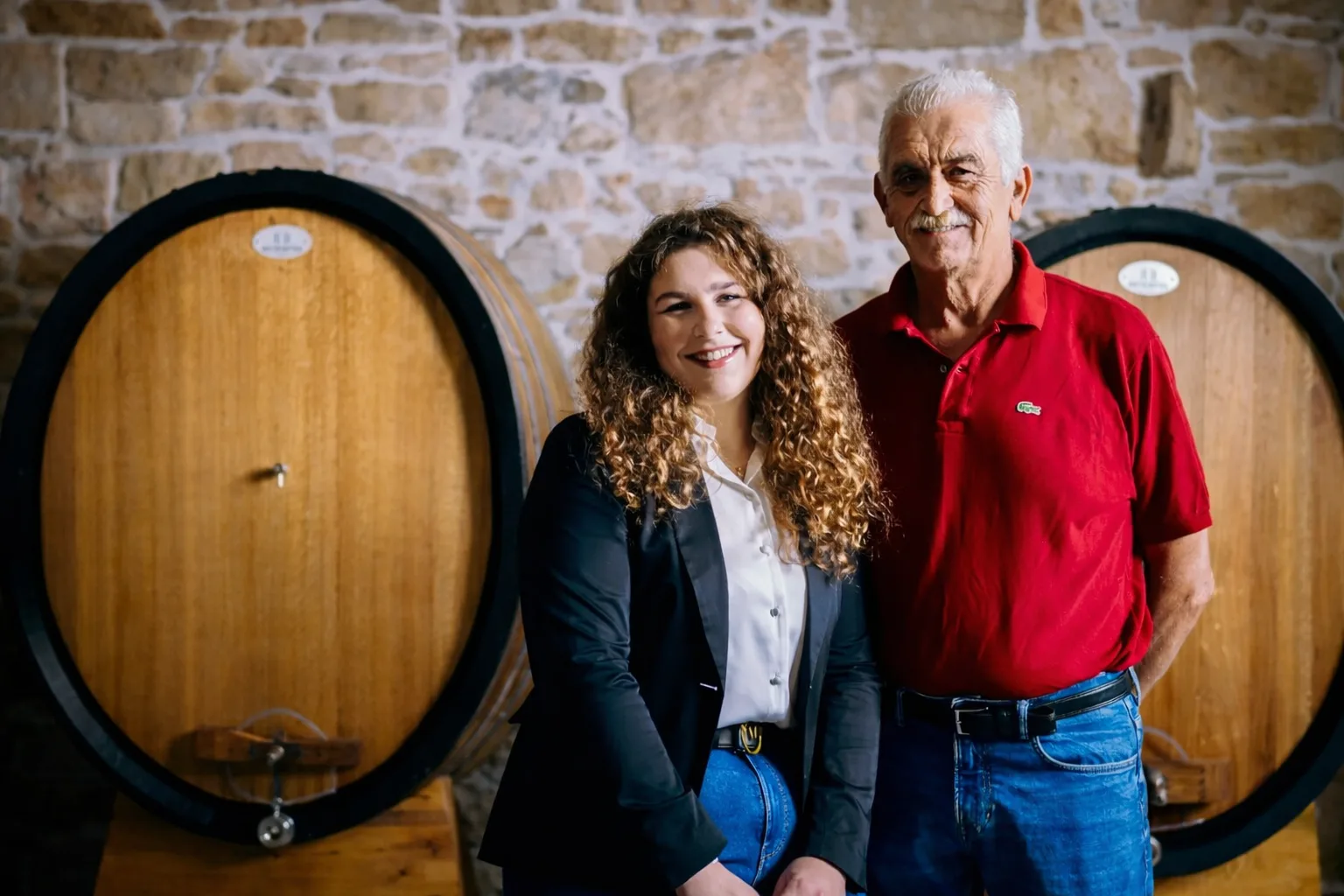
Today the winery is led by a new generation. Mariana Ferenac, trained in oenology, continues the work with a clear understanding of what she has inherited, shaping it through her own decisions in the vineyard and the cellar.
The family remains directly involved in every part of the process. Vineyard, cellar and development are not separate units, but parts of the same structure. Production is deliberately limited in order to keep control over every step.
Giulio Ferenac Wines remains what it has always been: a family estate rooted in the land, shaped by time and guided by responsibility.
There is no division between past and present. There is continuity.
Giulio Ferenac, born in 1958, is the founder of the winery in its present form. His work rests on a strong connection to the land and a consistent focus on the vineyard and the cellar. Over time he established a disciplined approach to production, with attention to detail and a measured understanding of how wine develops.
His wines reflect this. Cabernet Franc, one of the rarer varieties in the region, ages for years in wooden barrels, where it gains stability and structure. Malvazija, the native Istrian variety, is grown on sunny slopes and aged on fine lees, developing depth and balance. These wines were not created by following trends, but through continuity and work.
Mariana Ferenac represents the current generation and leads the winery today. She studied viticulture and oenology at the Faculty of Agriculture in Zagreb, where she earned a master’s degree in horticultural engineering. Her role covers both the vineyard and the cellar, with direct involvement in production and analytical work.
Her approach is based on observation and time. Work in the vineyard follows the conditions of each season, while decisions in the cellar are made in relation to the wine itself. One result of this work is Erudita, a Malvazija aged on the lees in acacia barrels, developed with clear intent and without compromise in the process.
Under her leadership the winery stays within its own limits, without increasing volume beyond what can be followed directly. The focus remains on consistency, structure and the right moment for each wine’s release.
The family remains closely connected to the estate. Giulio Ferenac is still present in the vineyard, passing on his experience through everyday work. His wife Daniela has been part of the winery’s development from the very beginning, keeping the family structure together over the years. Their daughters, Jasmina and Kristina, are also part of this continuity, each in her own way, while Mariana carries the responsibility for the current direction.
The winery is not divided between ownership and operational work. It remains a family structure in which work, responsibility and continuity are shared.

Terroir
Red earth, limestone and air.
The vineyards lie in Ferenci, near Vižinada, on the western Istrian plateau, at an altitude just under 300 metres. The land opens gradually towards the Mirna valley and further towards the Adriatic, creating a position constantly exposed to light and air flow, with no natural barriers to disturb its balance.
The soil is predominantly red Istrian earth, formed over limestone bedrock, compact in structure and rich in iron and minerals. It retains moisture while allowing the roots to reach deep into the mineral layers below the surface.
Within a relatively small area, the terrain is not uniform. Differences in soil depth, exposure and composition change from parcel to parcel, creating subtle but decisive differences in how the vines behave. These differences are neither corrected nor evened out.
The climate carries both Mediterranean and continental influences, without one prevailing over the other. Days are warm and marked by long hours of light, while nights stay fresh thanks to the altitude and constant air movement.
Ripening does not follow a predetermined pattern. Sugar accumulation, the preservation of acidity and the development of phenolic ripeness progress at different rhythms, requiring attention rather than intervention. The decision to harvest is not made by the calendar, but by balance.
The varieties planted on these positions respond directly to these conditions. Malvazija develops a restrained aromatic profile with inner structure, Chardonnay gains greater fullness, while Cabernet Franc and Cabernet Sauvignon ripen with a pronounced herbal note and a mineral foundation.
The vineyard is never pushed beyond what the land allows. The work stays within its limits.
Vision
Discipline before ambition.
The direction of the estate is defined by discipline, not ambition. Wine is not approached as a product to be shaped, but as a result that comes from conditions already set in the vineyard and carried through the process with precision and without deviation.
The work does not begin in the cellar and does not end in the bottle. It is an uninterrupted process in which every stage carries its own weight. Soil, exposure, air flow and the conditions of each season set the limits.
Control is established at the foundation. Yield is never increased beyond what the vineyard can sustain, and selection takes place early, without later corrections. Harvest is set when the structure is there, not when it is convenient.
Time remains a constant. Ageing is not shortened to meet demand, and release is not dictated by a schedule. A wine leaves the cellar only once it has reached its balance.
The scale of the estate stays within what can be managed directly. Growth is not a goal in itself. Land is added only where it can be understood and worked with the same level of care.
Under the current leadership of Mariana Ferenac, the estate is entering a phase that strengthens what has been built, without changing its foundations.
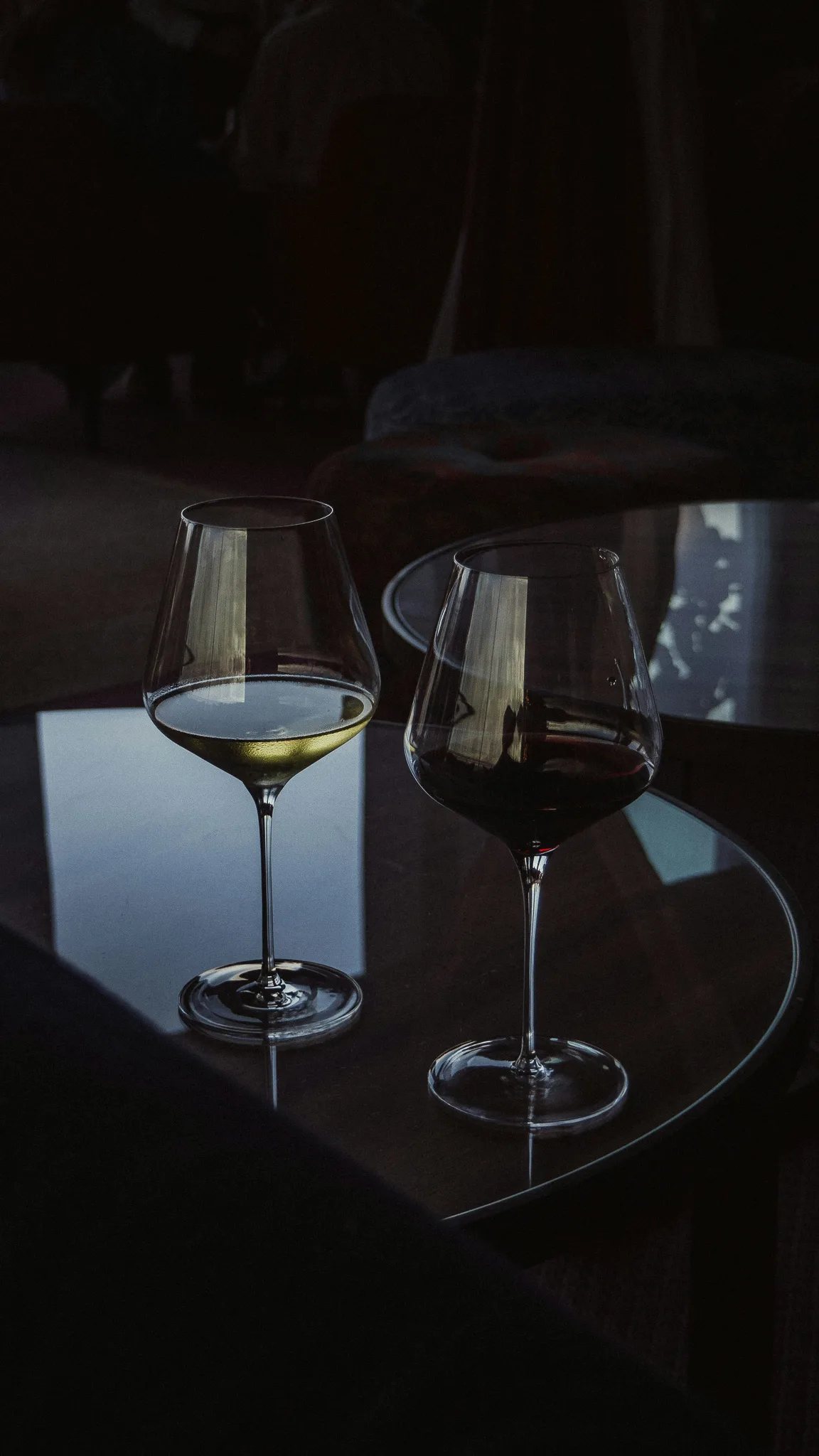
Every bottle is a concentrated expression of this process. It carries the weight of the vineyard, the discipline of the work and the time it was given to reach balance.
The intention remains unchanged: to make wines that stay true to their origin, shaped by time and made without compromise.