
Giulio Ferenac Wines
Maestria
Vineyard, method and cellar.
Vineyard
Balance, longevity and control.
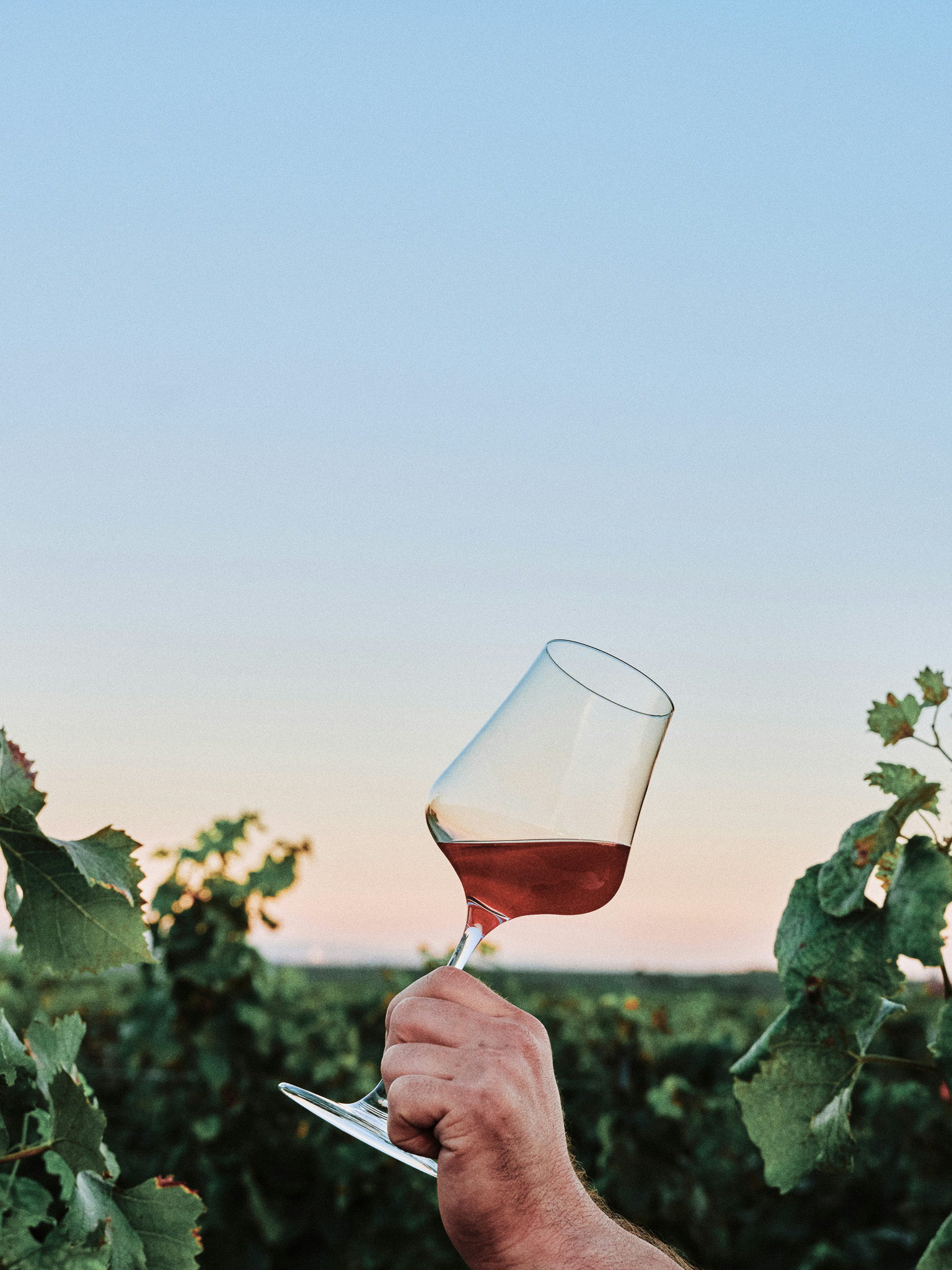
The vineyards extend across several distinct positions in the Ferenci and Vižinada area, including Verbinac, Jadro, Businac and Doci, together with smaller parcels that have been cultivated and maintained through generations. These are not new plantings imposed on the land, but places where the vine was present long before the estate took its current form.
Each of these positions carries its own character, shaped by subtle differences in soil depth, exposure and air flow. It is within these differences that the work in the vineyard is formed. There is no attempt to make the surface uniform or to impose a single approach.
The soil remains the fundamental element. Predominantly red Istrian earth, formed over limestone bedrock, compact and mineral, retains enough moisture to support the vine during dry periods while allowing the roots to penetrate deeply into the structure below the surface.
The climate further strengthens this structure. The vineyards are exposed to long, warm days with steady sunlight, while elevation and constant air movement bring cooler nights that preserve tension and structure.
Work in the vineyard follows a natural sequence, built through years of practice. Pruning is carried out with emphasis on balance and the longevity of the vine, tying and canopy management are adapted to each parcel, and the soil is maintained with measure.
The relationship with the vine remains direct. Each plant is observed as an individual within the whole. Decisions are made in the vineyard; they are not delayed or standardized.
The vineyards are not treated as a resource to be exhausted, but as a structure to be maintained and passed on. Only what they can give without disturbing balance is taken.
Method
Nothing is determined afterwards.
The work begins in the vineyard and remains within its logic.
Pruning is carried out at the end of winter, before the movement of sap begins, according to the Guyot system. The vine is reduced to a precise number of buds, setting the next vegetative cycle in advance.
During the growing season, the leaf canopy is maintained with balance and measure. Moderate thinning is carried out in the grape zone to ensure ventilation and optimal exposure to light, while the canopy is never removed completely.
The soil is worked throughout the year. After harvest, it is opened in depth, while during the season it is maintained on the surface to prevent erosion and return organic matter to the soil. Fertilization is carried out as needed, with mineral and organic materials, without excess.
Protection follows the conditions of each individual year. Treatments are adapted to rainfall and climate conditions, using preparations aligned with an ecological approach and without herbicides.
Yield is reduced in the vineyard. Excess clusters are removed early, leaving only what the vine can carry without strain. Concentration is determined at that moment, not later.
Harvest is carried out by hand, in small crates. The moment is chosen when sugars, acidity and phenolic ripeness are in balance. Special attention is given to seed ripeness, which determines the structure of the wine.
For wines of higher categories, grapes are taken from selected positions within the estate. The vineyard is not viewed as one uniform surface, but as a series of parcels observed individually.
In the cellar, white varieties are processed immediately. Crushing is followed by pressing without delay, and the must is clarified by cold settling before fermentation.
Fermentation is controlled and even, at low temperatures, in order to preserve the structure brought by the grapes. After fermentation, the wine is separated from the coarse lees and left on fine lees, where it continues to develop.
Bâtonnage is carried out with measure, more frequently at the beginning and then less often, building texture without disturbing the line of the wine.
Part of the Malvazija is directed into maceration lasting several months, with fermentation on indigenous yeasts. Alcoholic and malolactic fermentation take place at the same time, creating a broader and more complex structure.
Chardonnay ferments under controlled conditions in stainless steel, with integrated malolactic fermentation. Erudita completes part of its fermentation in acacia, where it continues to develop and remains for an extended period before bottling.
Red varieties ferment on the skins, with regular extraction. After pressing, the wine settles before entering wood. Ageing is not shortened, and it continues in bottle.
White wines are stabilized at low temperatures before bottling. All wines are kept in controlled conditions, without light and without temperature oscillation.
Release follows the condition of the wine. Nothing leaves the cellar before it is ready.
Cellar
Calm, stability and time.
The cellar is the place where the work carried out in the vineyard takes its final form. What arrives here is not raw material requiring transformation, but grapes that already carry structure, balance and direction, shaped by soil, exposure and the course of the season.
In the main estate building, the process begins with precision and control. Malvazija and Chardonnay are handled in stainless steel, where temperature and time are guided carefully, without unnecessary intervention.
Next to this space is the older cellar, built from Istrian stone, where time moves differently. This part of the estate carries the physical presence of its own history, not as a reference, but as an active environment in which wine continues its development.
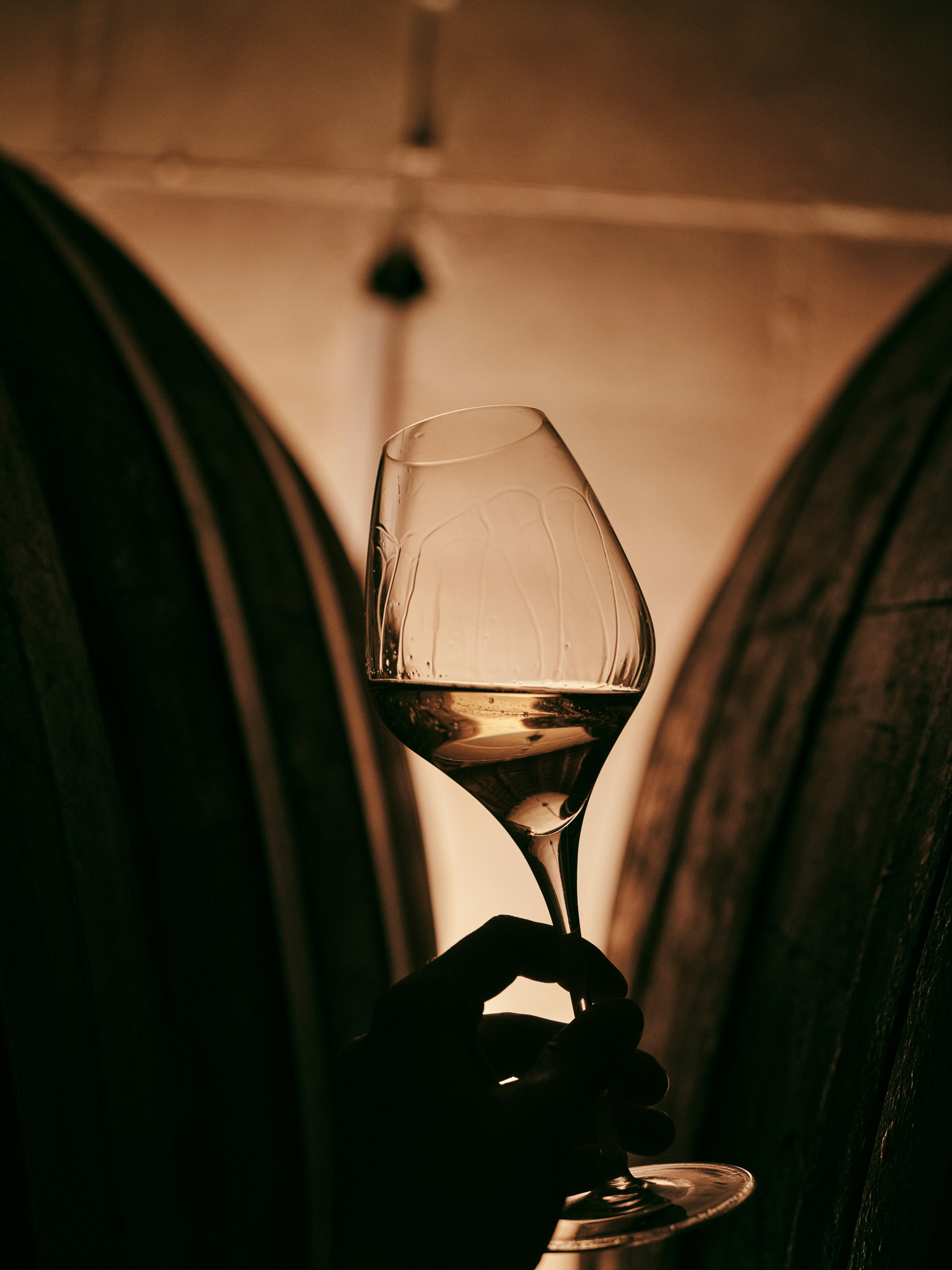
Large wooden barrels and barriques are placed within walls that maintain stable temperature and even humidity throughout the year, without the need for artificial correction.
In this space, wines intended for longer ageing rest undisturbed. Cabernet Franc and other red varieties develop in wood over extended periods, gaining structure and depth without losing their origin.
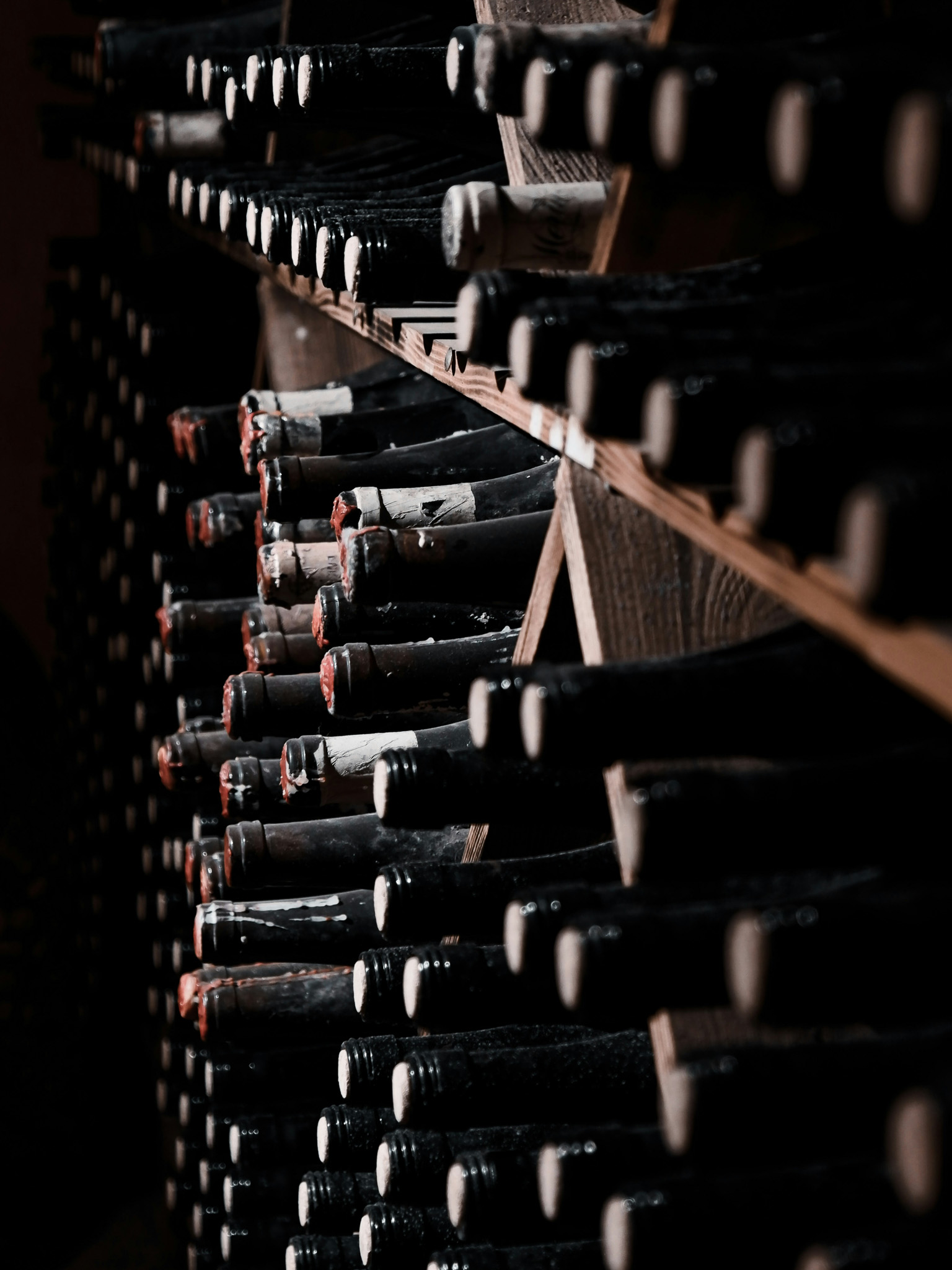
Bottle ageing continues within the same space. When the wine in barrel reaches its form, it is transferred into bottle and returned to the cellar, where it remains until complete stability.
Work in the cellar is not defined by a series of operations, but by continuity. Every moment, from the arrival of the grapes to the final decision to release the wine, carries its own weight.
The cellar does not change the wine. It allows it to become what it already is.
Availability
Wines are released when they are ready.
Private Tastings
Tastings and visits are organized by appointment, in a rhythm that respects the work in the vineyard and cellar.
Limited Releases
Wines are released in quantities that come from selection and the character of the vintage, not from a predetermined need for volume.
Direct Purchase
Selected wines are available directly from the estate, with prior contact and availability confirmation.